Greensboro’s south side sees weather swing from bright sun to sudden downpours. If you Windshield replacement Greensboro drive daily around Forest Oaks, Randleman Road, or toward the 29 corridor, you’ve probably watched a summer storm hit just as the evening commute stacks up. Modern windshields do more than keep the rain off your lap. They host rain sensors, driver‑assist cameras, humidity modules, acoustic layers, and antenna traces, all of which affect how your car behaves when the sky opens up or when traffic stops short. Replacing glass in 27406 is no longer a simple swap. It is a controlled repair with electronic reattachment and calibration steps that protect visibility and the safety systems you rely on.
I’ve spent years in and around Greensboro auto glass bays and in mobile trucks parked on red‑clay driveways. The difference between a windshield that looks right and one that works right shows up at 55 miles per hour in a heavy shower on I‑85. ADAS calibration Greensboro The details below explain what matters in windshield replacement for vehicles with rain sensors and cameras, how to choose between OEM and aftermarket glass, when mobile service makes sense, and what proper calibration looks like in our market.
Why rain sensors are picky about glass
Most rain sensors sit behind the rearview mirror inside a plastic shroud. The sensor looks through a gel pad or optical coupler and “reads” how water changes light refraction on the exterior glass. If the gel pad has bubbles, if the coupler sits slightly off center, or if the windshield’s frit band isn’t the right shape, your wipers can run slow in a downpour or chatter on a dry windshield. I’ve seen owners return from a bargain install with wipers that miss the first few minutes of light rain, then jump to full speed for no reason. Nine times out of ten, re‑seating the sensor with the correct coupler pad solves it, but only if the glass provides the intended optical path.
Different automakers tune sensors for specific glass thickness and coatings. Some Toyota and Honda windshields use infrared‑friendly zones. German brands often rely on coated glass with exact frit patterns for sensor placement. Swapping in generic glass might fit, but the sensor’s field can be wrong by a few degrees, and that small error shows up as inconsistent wipe behavior. When a shop in 27406 says they’ll transfer the sensor, ask how they handle the coupler. The best techs clean both surfaces with isopropyl, use the right release tabs on the pad, center the ring with alignment marks, and let the gel settle before powering the car up.
Cameras that watch the road need calibrated targets, not guesswork
If your vehicle has lane‑keeping assist, automatic high beams, or automatic emergency braking, there is likely a forward‑facing camera or a camera‑radar combo mounted to the windshield. Even tiny positional shifts during replacement change what the camera sees. The camera expects the world to line up with a known grid. When glass moves, the grid moves, and your Advanced Driver Assistance Systems (ADAS) need a new map.
Calibration falls into two broad methods: static calibration with printed targets and precise measurements in a controlled bay, and dynamic calibration where the camera relearns on a test drive at set speeds over well‑marked roads. Some vehicles require both. In 27406 and nearby 27401 to 27410, I’ve watched calibration fail on a dynamic drive because lane markings on a worn side street didn’t meet the system’s contrast requirements. We had to choose a better route, then everything snapped into spec.
Here’s the part most people overlook. Even if your dash shows no warning lights, the Mobile auto glass Greensboro system can drift. I once measured a vehicle that would initiate lane‑keep several inches late to the left, even with a clean dash. After a static calibration with targets set at a measured 4 meters and centerline verified with a plumb bob, the correction was obvious. On the next highway run, the car held the lane like it did when new.
If a shop promises same‑day glass and ADAS calibration, that is realistic if they control the environment. When a mobile truck handles glass in your driveway, they may schedule calibration at a partnered facility the next morning. Either route works, as long as the calibration actually happens and a printout or report confirms it. If you’re calling around for greensboro windshield replacement in 27406 or for mobile windshield replacement greensboro in 27406 greensboro nc, ask about their make‑and‑model calibration process, not just whether they “can do it.”
Greensboro realities: weather, roads, and install timing
Humidity in Guilford County is not kind to adhesives. Polyurethane urethane cures through moisture, but too much moisture or low temperatures can slow or skew cure times. On a summer afternoon near Old Randleman Road, a glass bead can skin quickly in the heat, then take longer than expected to harden through. Experienced techs adjust bead size and lay pattern for local conditions, and they keep an eye on safe drive‑away time. You’ll often hear ranges from 30 minutes to several hours, depending on Side window replacement Greensboro adhesive chemistry and air conditions. If you rely on lane‑keep or AEB, plan to leave the car until both the glass has cured enough for calibration and the ADAS map has been reset.
Road conditions matter too. Our mix of shaded secondary roads and bright six‑lane segments makes dynamic calibration hit or miss. Well‑painted lanes on Gate City Boulevard are calibration gold. Faded lines on a neighborhood cut‑through are not. A tech who knows the area will choose routes that give the camera what it needs on the first pass.
OEM glass vs. quality aftermarket: how to choose
This isn’t a one‑size decision. I’ve installed OEM windshields that came with the exact bracket geometry and acoustic glass thickness, which made rain sensor coupling painless and reduced cabin noise by a noticeable margin on the Greensboro Urban Loop. I’ve also used high‑tier aftermarket glass with OE‑correct bracket placement that calibrated perfectly and saved the customer a few hundred dollars.
When I recommend OEM glass greensboro 27406, it is usually for vehicles where:
- The camera bracket design is proprietary and sensitive to minute angle changes. The windshield includes embedded heaters around the camera or wiper park. The acoustic interlayer and tint gradient affect driver eye‑box glare in a way the owner notices.
Aftermarket glass greensboro 27406 can be a smart choice when the manufacturer and part number match known‑good patterns and when access to OEM is delayed. The trade‑off comes down to bracket fidelity and optical quality. A flawed bracket by even half a millimeter can force a calibration to the edge of tolerance. A slightly wavy interlayer shows up as “swim” when you look at distant traffic lights through the passenger side. Reputable shops keep notes on which aftermarket lines behave like OE on specific models and which to avoid.
What a careful 27406 replacement looks like
On a typical job with rain sensor and camera, the flow is steady and methodical, not rushed. We verify VIN and options to pull the correct glass. Trim comes off without bending clips, the cowl is lifted, and fresh razor blades cut the old urethane while we leave a clean, thin bed to bond against. The pinch weld gets prepped with primer only where the manufacturer requires it. Anything more is a red flag. The new bead lays in a continuous, even triangle, corners filled without voids. We set the glass once. If we lift and reset, we start over on the adhesive.
Inside the cabin, the camera bracket is cleaned and the camera remounted to spec torque. The rain sensor coupler is replaced, not reused, unless the automaker explicitly allows reuse. The mirror shroud goes back without rattles. Power reconnects after the gel pad settles. Then calibration. Static boards are placed on a level surface with distances measured from the wheel centerline, not guessed. Dynamic drives happen on chosen roads at specified speeds, often 25 to 45 mph for a few miles. If our route between 27406 and downtown meets the contrast rules, the camera updates quickly.
By the way, mobile auto glass greensboro 27406 can deliver the same results if the tech brings the right stands, lasers, and targets. The difference is discipline. A driveway can work as well as a bay when measurements are respected and wind is low.
Insurance, cost, and why “free” glass still deserves scrutiny
North Carolina policies vary. Some comprehensive plans waive deductibles for windshield repair but not replacement. If you carry a $500 deductible and the glass quotes at $350 to $700 depending on ADAS, you’ll pay out of pocket. Insurance windshield replacement greensboro 27406 typically requires pre‑approval when cameras are involved because calibration adds cost. From what I see, total invoices for camera‑equipped vehicles often run 30 to 60 percent higher than non‑ADAS vehicles, not because of the glass alone, but because of calibration labor and equipment time.
“Free” mobile offers are usually marketing shorthand for direct‑billing your insurer. That’s fine as long as the shop documents calibration. Ask for the report or screenshots from the scan tool showing pass/fail and offsets. A reputable greensboro auto glass replacement 27406 provider will share that without hesitation.
Repair when you can, replace when you must
If your windshield has a small star break or bullseye outside the camera’s field of view and smaller than a quarter, a proper resin repair can stop the spread and preserve the original glass. Auto glass chip repair greensboro 27406 and rock chip repair greensboro 27406 services are quick, and in many cases insurance waives the deductible. I favor repair when the chip sits above the wiper sweep on the passenger side and when the damage doesn’t distort camera vision.
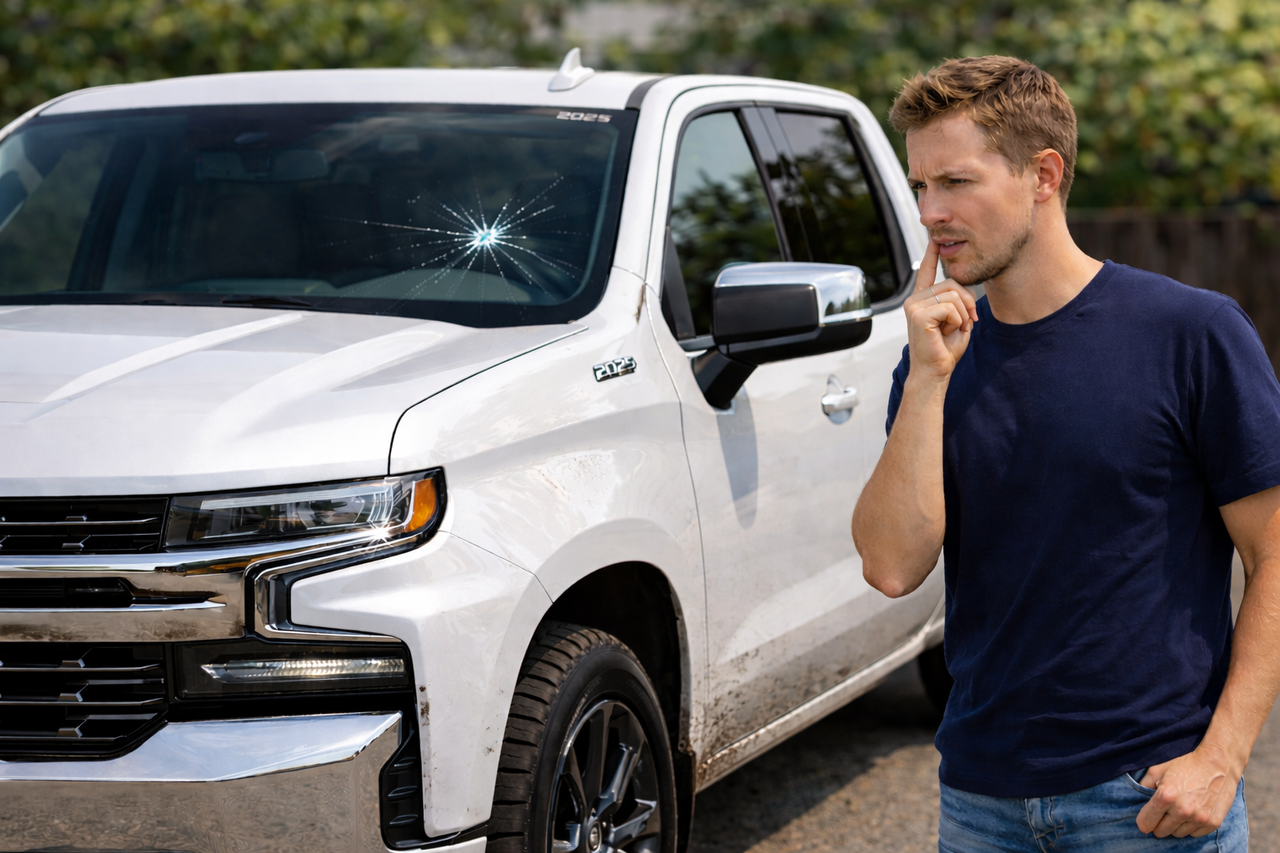
Cracks are a different story. A crack near the rain sensor or within the camera’s viewing cone can cause glare streaks that the system misreads. In one case near Woody Mill Road, a lengthwise crack just touching the camera area caused the vehicle to throw intermittent AHB errors after dusk. Replacement solved it because the camera finally saw a clean, consistent field. If you’re searching for windshield crack repair greensboro in 27406 greensboro nc, your tech should assess whether repair would leave optical artifacts. If so, replacement is the safer call.
Mobile or in‑shop: which is better for you
Mobile windshield replacement greensboro 27406 makes sense when your schedule is tight and the weather cooperates. I like mobile service for straight‑forward jobs on driveways that are relatively level, with space to set targets if the car needs static calibration. The installers arrive with glass supports, cordless tools, canopy if needed, and a plan for curing time. If the job requires advanced static boards or a floor so level that a marble won’t roll, the shop bay wins.
For rainy days, a shop can control humidity and airflow around the urethane and handle same‑day ADAS more consistently. If you drive for work and need greensboro windshield replacement 27406 with immediate calibration, ask about in‑house bays with target walls.
How Greensboro addresses side and rear glass
Side and back glass are simpler in some ways, yet they still interact with sensors. A shattered quarter glass can affect cabin pressure and acoustic balance. Rear glass with defroster lines requires careful tab transfer and continuity checks. For 27406 back glass replacement greensboro service greensboro nc, I look for shops that meter the defroster after install and confirm the grid warms evenly. For side window replacement greensboro in 27406 greensboro nc, the priority is waterproofing and regulator alignment so the window seals at highway speeds without whistle.
When fleets and work trucks need priority
Fleet managers around 27406 and 27401 keep vehicles on the road. Downtime costs money. Fleet auto glass greensboro service greensboro nc often pairs mobile service with scheduled static calibrations at a central location. Trucks with higher rake angles sometimes hide cameras behind larger housings. Installers who see the same platforms repeatedly build tribal knowledge on which glass lines calibrate fast and which require OEM. I’ve seen a difference of 45 minutes between two part brands on the same model simply because one used a more precise camera bracket weldment.
A quick owner’s checklist before you book
- Confirm your options. Note if you have lane‑keep, automatic high beams, or adaptive cruise that watches the road. Tell the shop. Ask about calibration. Static, dynamic, or both, and where they’ll perform it. Decide on glass. If the vehicle is sensitive or you value specific acoustic traits, ask for OEM glass greensboro in 27406 greensboro nc. If you choose aftermarket, request a brand the shop trusts on your model. Plan time. Safe drive‑away depends on adhesive and weather. Build a cushion into your day, especially if calibration follows the cure window. Keep the area clean. If mobile, provide a flat space and hold off on car washes for at least 24 to 48 hours.
Neighborhood notes around 27406 and nearby ZIPs
If you commute through downtown from 27406 into 27401 or 27403, lane markings vary block to block. Good shops know to calibrate on the cleaner sections near Gate City or around the Urban Loop rather than side streets with patchwork paint. Those same shops tend to handle related needs in adjacent areas, from greensboro auto glass repair 27401 to mobile auto glass greensboro 27403 and windshield calibration greensboro 27405. While you don’t need to memorize every phrase like greensboro windshield replacement near 27401 greensboro nc or auto glass greensboro near 27402 greensboro nc, it helps to choose a provider that regularly works across these neighborhoods and understands which routes make dynamic calibration painless.
What separates a careful tech from a careless one
Good work looks invisible. Trim seats flush, the cowl drains align, and the VIN notch is clean. The rearview mirror doesn’t wobble over railroad tracks. Rain sensors wake up with the first mist on the glass. Cameras recognize lane lines without drama. I’ve watched newer techs improve fast when they learn to slow down on three points: bead uniformity, sensor coupling, and measurement discipline during calibration. That is where results live.
If you want to see proof, ask to watch a portion of the setup. You should see tape‑measure readings from wheel hubs, target boards at specific distances, and a scan tool walking through calibration steps. Hearing “we drove it around the block” isn’t enough for camera cars. Hearing “we drove a route at 35 to 45 mph with clear lane lines until the scan tool confirmed success” is more like it.
When noise and fogging become clues
After a replacement, listen at 45 mph on the highway. An unexpected hiss at the A‑pillar can mean a missed clip or a seam that needs a dab more urethane. If you see persistent fogging near the sensor area on humid mornings, the coupler pad may have trapped air or the gel didn’t seat. Both are fixable without pulling the glass, but they require a tech who respects that small optical interface. Don’t ignore tiny symptoms. They often point to the very systems you count on when rain hits Wendover Avenue at dusk.
Final thought for 27406 drivers
Windshield replacement in 27406 is part glasswork, part electronics, and part local savvy. Rain sensors and cameras make life easier when they see the world clearly through the right pane, mounted the right way, with the right calibration. Choose a shop that explains steps without hedging, that documents ADAS results, and that treats your windshield as the sensor platform it is. The payoff shows up the next time a sudden storm rolls across Greensboro, the wipers sweep at the right speed, the high beams behave, and the steering nudge keeps you centered on a wet, reflective lane as if nothing ever happened.